Bidet Cleaning and Maintenance Guide
How to clean your bidet seat or attachment, descale hard water buildup, maintain nozzles, and replace filters. Simple routines that take minutes.

Table of Contents
- What You Will Need
- Daily Care (30 Seconds)
- Weekly Cleaning (5 Minutes)
- Step 1: Wipe the Seat and Lid
- Step 2: Clean the Nozzle
- Step 3: Wipe the Exterior and Controls
- Monthly Deep Clean (15 Minutes)
- Descale the Nozzle
- Clean the Inlet Filter
- Inspect the T-Valve and Hoses
- Seasonal Maintenance (Every 6 Months)
- Replace the Water Filter
- Check the Deodorizer Cartridge
- Test the GFCI Outlet
- Cleaning by Bidet Type
- Non-Electric Attachments (TUSHY, BioBidet SlimEdge, LUXE NEO)
- Electric Bidet Seats (Brondell Swash, TOTO Washlet, BioBidet)
- Smart Toilets (TOTO Neorest, Kohler Veil)
- Warning Signs That Something Needs Attention
- How Long Should a Bidet Last?
- Quick Reference: Maintenance Schedule
- Next Steps
TL;DR
Wipe your bidet seat and nozzle weekly with a damp cloth and mild soap. Descale with white vinegar monthly if you have hard water. Replace the inlet filter every 6 to 12 months on electric seats. The whole routine takes under 5 minutes and keeps your bidet hygienic and functioning for years.
A bidet is one of the lowest-maintenance fixtures in your bathroom. But "low maintenance" does not mean "no maintenance." A few minutes of care each week keeps your bidet hygienic, prevents mineral buildup, and extends the life of the unit by years.
This guide covers cleaning routines for every type of bidet, from simple attachments to electric seats and smart toilets. We will also cover descaling, filter replacement, and the warning signs that mean it is time to call a professional.
What You Will Need
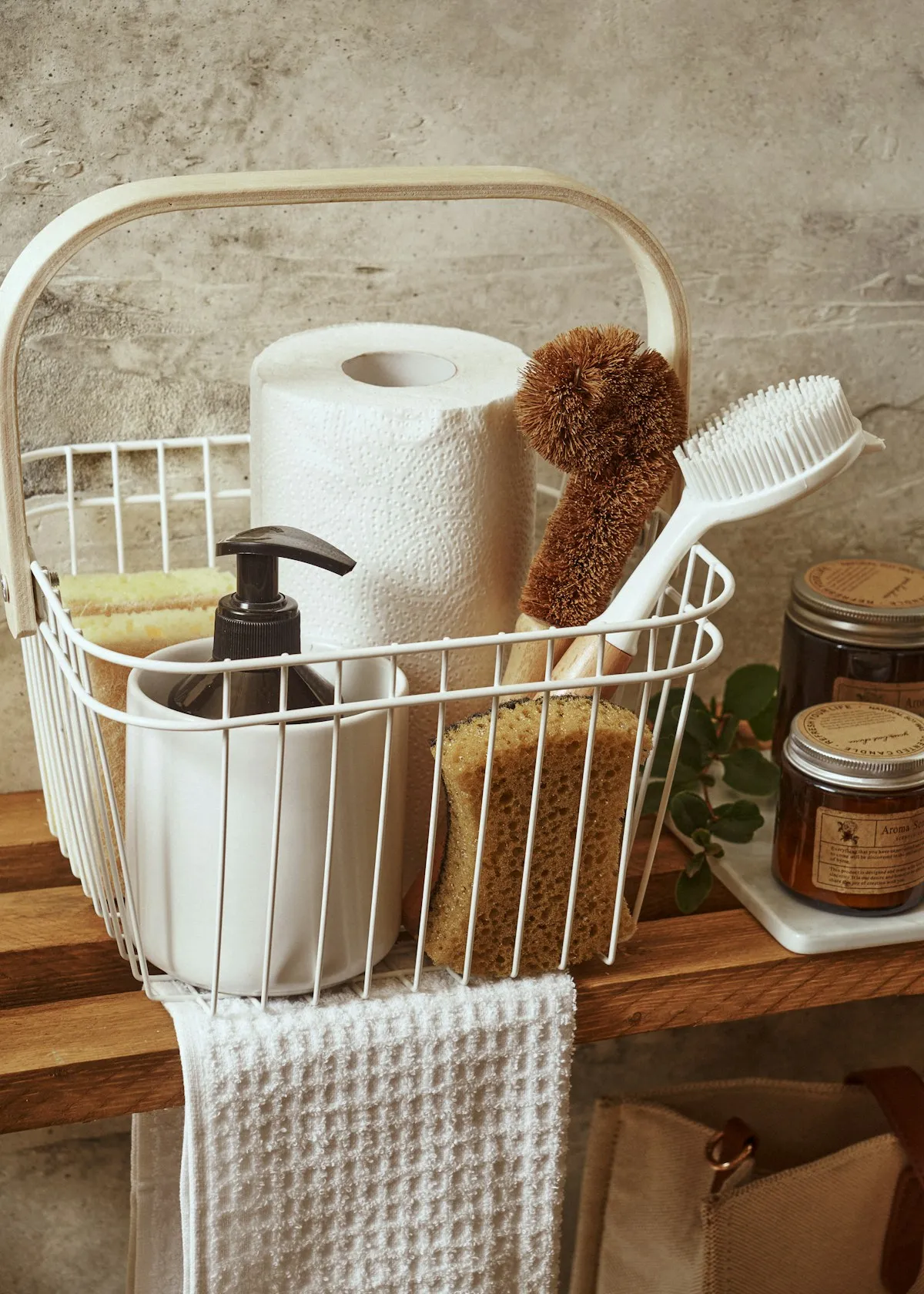
You probably already have everything on hand:
- Microfiber cloth (or any soft, lint-free cloth)
- Mild dish soap (nothing abrasive or heavily perfumed)
- White vinegar (for descaling and mineral deposits)
- Soft-bristle toothbrush (dedicated to cleaning, obviously)
- Baking soda (for stubborn stains)
- Replacement water filter (for electric seats; check your model)
What to avoid: Harsh bleach, abrasive bathroom cleaners (like Comet or Ajax), steel wool, magic erasers on the nozzle, and any product containing hydrochloric acid. These will damage the plastic housing, strip protective coatings, and degrade rubber seals.
Daily Care (30 Seconds)
You do not need to do anything elaborate every day. Just two habits:
Use the self-cleaning function. If your bidet has a self-clean button or automatic pre/post rinse, let it run. This flushes fresh water over the nozzle before and after each use and prevents buildup from getting started.
Wipe splashes. If you notice water spray on the seat or rim, give it a quick wipe with a dry cloth. Standing water can leave mineral spots over time, especially with hard water.
Weekly Cleaning (5 Minutes)
This is the core of your maintenance routine. Do this once a week and your bidet will stay spotless.
Step 1: Wipe the Seat and Lid
Dampen your microfiber cloth with warm water and a drop of mild dish soap. Wipe the entire seat surface, the lid (top and underside), and the area around the hinges. Rinse the cloth and wipe again to remove soap residue.
For electric seats with a quick-release button, pop the seat off the mounting bracket and wipe underneath. Dust and grime collect in the gap between the seat and the bowl; this is the spot most people miss.
Step 2: Clean the Nozzle
Most bidet seats have a nozzle extend button or a cleaning mode that pushes the wand out so you can reach it.
- Press the nozzle cleaning button or gently pull the nozzle out (check your manual for the correct method).
- Wipe the nozzle with your damp cloth. Use the soft toothbrush to gently scrub around the spray holes.
- Be gentle. Do not yank, twist, or push the nozzle with force. The wand mechanism is precise; rough handling can misalign it.
- Let the nozzle retract and run the self-clean cycle once more.
Step 3: Wipe the Exterior and Controls
For side-panel controls, wipe the buttons with a damp cloth. For wireless remotes, wipe with a barely damp cloth (keep water away from the battery compartment).
Clean the area where the bidet hose connects to the T-valve. Check for any drips while you are there.
Monthly Deep Clean (15 Minutes)
Once a month, go a step further to prevent mineral buildup and catch small issues before they become big ones.
Descale the Nozzle
Hard water leaves calcium and mineral deposits on the nozzle tip, which can clog spray holes and reduce water pressure over time. Even if you have moderately hard water, monthly descaling makes a noticeable difference.
- Extend the nozzle using the cleaning mode.
- Soak a cloth in undiluted white vinegar and wrap it around the nozzle tip.
- Leave it for 10 to 15 minutes. The vinegar dissolves calcium deposits without damaging the plastic.
- Use the soft toothbrush to gently scrub the spray holes.
- Rinse by running the self-clean cycle or wiping with a damp cloth.
Hard water areas: If you see white crust forming within a week or two, increase to a bi-weekly descaling schedule. You might also consider a water softener for your home, which benefits all your fixtures.
Clean the Inlet Filter
Electric bidet seats have a small mesh filter where the water hose connects to the seat. This filter catches sediment and debris before they reach the internal components.
- Turn off the water supply at the shut-off valve.
- Disconnect the bidet hose from the seat (have a towel ready for drips).
- Pull out the mesh filter (it is usually a small cylindrical screen).
- Rinse the filter under running water. Use the toothbrush to remove any sediment.
- Reinsert the filter, reconnect the hose, and turn the water back on.
- Check for leaks at the connection point.
If the filter is discolored, cracked, or the mesh is torn, replace it. Most manufacturers sell replacement filters for $5 to $15. Check your manual for the part number.
Inspect the T-Valve and Hoses
While the water is off, check every connection point:
- T-valve to fill valve (bottom of toilet tank)
- Supply hose to T-valve
- Bidet hose to T-valve
- Bidet hose to the seat or attachment
Tighten anything that feels loose. Look for white mineral crust around fittings, which can indicate a slow drip. If you spot corrosion on any metal fitting, replace it before it fails.
Seasonal Maintenance (Every 6 Months)
Twice a year, spend a few extra minutes on these tasks.
Replace the Water Filter
Most electric bidet seat manufacturers recommend replacing the inlet filter every 6 to 12 months. If you have hard water or notice reduced water pressure, err toward every 6 months.
Common replacement filters by brand:
- Brondell Swash: Twist-in mesh filter, sold in packs of 2 to 4
- TOTO Washlet: Built-in mesh screen (rinse clean; replace if damaged)
- BioBidet: Inline mesh filter behind the hose connection
Check the Deodorizer Cartridge
Some electric seats (like the Brondell Swash 1400 and TOTO Washlet C5) include a built-in air deodorizer with a replaceable carbon filter. These typically last 6 to 12 months depending on use. If you notice the deodorizer is no longer effective, swap the cartridge.
Test the GFCI Outlet
For electric seats, press the "Test" button on your GFCI outlet to confirm it trips, then press "Reset." A GFCI that does not trip needs to be replaced by an electrician. This is a safety check, not a bidet maintenance item, but it takes 5 seconds and matters.
Cleaning by Bidet Type
Non-Electric Attachments (TUSHY, BioBidet SlimEdge, LUXE NEO)
These are the simplest to maintain. The weekly nozzle wipe and monthly descaling are all you need. There are no filters, no electronics, and no moving parts besides the nozzle and pressure dial.
One thing to watch: the attachment plate sits between your toilet seat and the bowl. Lift the seat periodically and clean underneath the plate. Moisture gets trapped there and can develop mildew if ignored.
Electric Bidet Seats (Brondell Swash, TOTO Washlet, BioBidet)
Follow the full weekly and monthly routine above. Pay special attention to the inlet filter and deodorizer cartridge. Keep the power cord dry and routed away from the floor where water could pool.
If your seat has a quick-release function, use it monthly to clean underneath. This area collects more grime than you would expect.
Smart Toilets (TOTO Neorest, Kohler Veil)
Smart toilets follow the same cleaning principles, but some maintenance tasks require a professional. The integrated bowl, concealed trapway, and internal water lines are not user-serviceable on most models.
For day-to-day cleaning, treat the nozzle and seat just like an electric bidet seat. For anything involving the internal plumbing, the flush mechanism, or electrical components, contact the manufacturer or a qualified plumber.
Warning Signs That Something Needs Attention
Weak or uneven spray pressure. Clean the nozzle and filter first. If pressure does not improve, the internal pump or water line may have a blockage. On non-electric attachments, check that the shut-off valve is fully open and the T-valve is not clogged.
Water leaking from the base of the seat. This usually means a loose connection at the bidet hose or a worn gasket. Tighten the connection and inspect the rubber washer inside the fitting. Replace the washer if it is cracked or flattened.
Nozzle does not extend or retract smoothly. Mineral buildup in the nozzle housing is the most common cause. Descale with vinegar. If the nozzle is physically stuck, do not force it. Contact the manufacturer for guidance, as forcing it can break the wand mechanism.
Unusual odor that persists after cleaning. Bacteria can grow in the nozzle housing if moisture sits stagnant. Run the self-clean cycle daily, clean the nozzle thoroughly, and ensure the bathroom has adequate ventilation. If the smell continues, the nozzle assembly may need replacement.
Error codes on electric seats. Consult your manual. Common codes relate to water temperature sensor issues, nozzle motor errors, or seat sensor problems. Most can be resolved by unplugging the seat for 30 seconds and plugging it back in. Persistent codes mean it is time to contact support.
How Long Should a Bidet Last?
With proper maintenance, you can expect:
- Non-electric attachments: 5 to 10 years. The main failure point is the pressure control valve.
- Electric bidet seats: 5 to 8 years. Heating elements and nozzle motors are the first components to wear. Higher-end models from TOTO and Brondell tend to last longer.
- Smart toilets: 10 to 15 years for the toilet itself; the bidet components may need service at the 7 to 10 year mark.
Regular descaling and filter replacement are the two things that have the biggest impact on longevity. Mineral buildup is the number one killer of bidet seats, and it is entirely preventable.
Quick Reference: Maintenance Schedule
| Task | Frequency | Time |
|---|---|---|
| Self-cleaning nozzle cycle | Every use | Automatic |
| Wipe seat and nozzle | Weekly | 5 minutes |
| Descale nozzle with vinegar | Monthly | 15 minutes |
| Clean inlet filter | Monthly | 5 minutes |
| Replace inlet filter | Every 6-12 months | 5 minutes |
| Replace deodorizer cartridge | Every 6-12 months | 2 minutes |
| Inspect T-valve and hoses | Every 6 months | 5 minutes |
| Test GFCI outlet | Every 6 months | 30 seconds |
Next Steps
Now that you know how to keep your bidet in top shape, check out our Best Bidet Seats of 2026 if you are still picking a model, or read our installation guide if your new bidet just arrived. For budget-friendly options that are especially easy to maintain, see our Best Budget Bidet Attachments roundup.