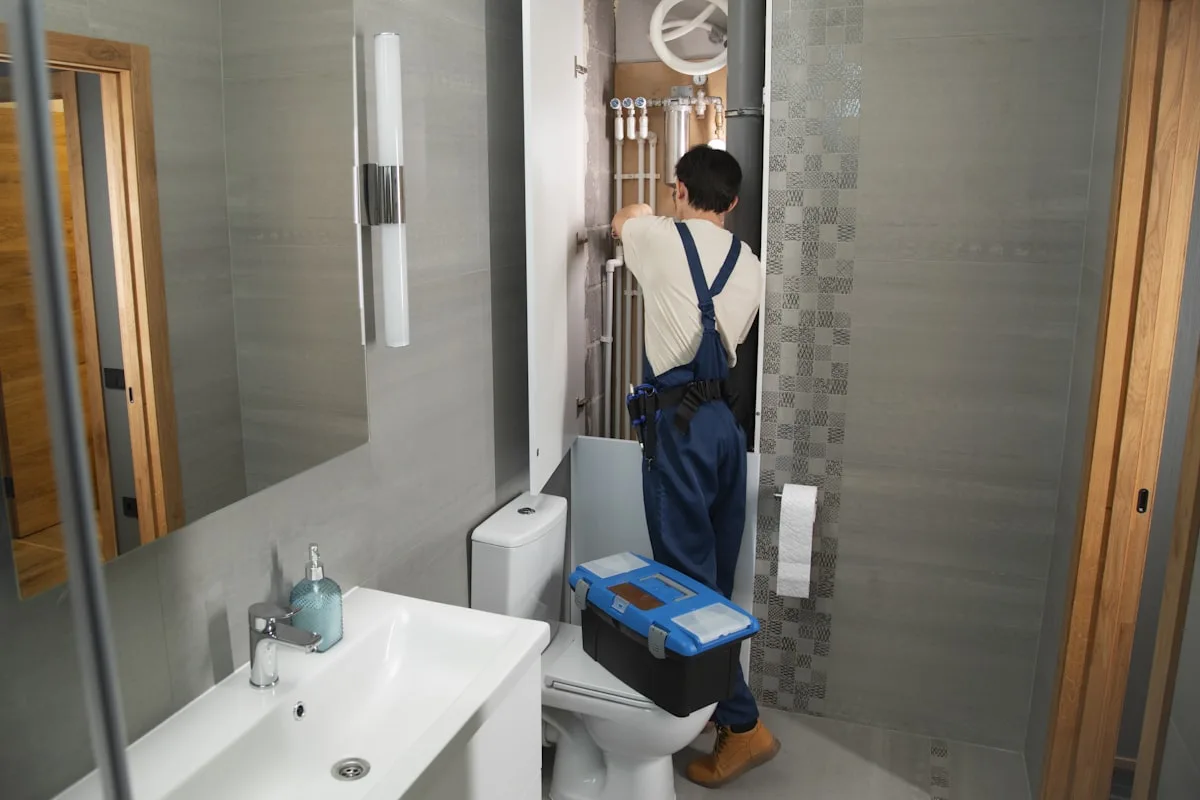
How to Install a Bidet Without an Outlet
No GFCI outlet near your toilet? Install a non-electric bidet in 15 minutes, get warm water without electricity, and skip the electrician entirely.

Table of Contents
- Why You Do Not Need an Outlet at All
- Option 1: A Cold-Water Non-Electric Attachment
- Option 2: Warm Water Without Electricity
- A Note on Battery and Remote Non-Electric Models
- How to Install a Non-Electric Bidet, Step by Step
- What you need
- Step 1: Turn off the water
- Step 2: Disconnect the supply hose
- Step 3: Install the T-valve
- Step 4: Mount the attachment
- Step 5 (warm-water models only): Tee into the sink hot line
- Step 6: Turn the water on and test
- GFCI Outlet vs Non-Electric: The Cost and Effort Math
- What to Buy
TL;DR
At Bidet Scout, the simplest way to install a bidet without an outlet is a non-electric attachment that runs on water pressure alone. The Luxe Bidet Neo 185 is our top pick because it adds warm water by teeing into your sink's hot line, no GFCI, no electrician, and a 15-minute install with one wrench.
Full Comparison
| # | Product | Best For | Rating | Price | |
|---|---|---|---|---|---|
| 1 | Luxe Bidet Neo 185 Top Pick Luxe Bidet | Best warm water without electricity | 4.5 | $$ | Check Price |
| 2 | TUSHY Classic 3.0 TUSHY | Best cold-water attachment overall | 4.5 | $$ | Check Price |
| 3 | BioBidet SlimEdge BioBidet | Cheapest no-outlet option | 4.3 | $ | Check Price |
| 4 | Brondell SimpleSpa SS-150 Brondell | Best build quality on a budget | 4.3 | $ | Check Price |
If there is no electrical outlet near your toilet, you have not run out of options. You have run into the single most common reason people think they cannot own a bidet, and it is a problem with an easy fix.
Electric bidet seats need a GFCI outlet within about four feet of the toilet. Plenty of bathrooms, especially in older homes, condos, and rentals, simply do not have one. The good news is that the best-selling bidets in the country are non-electric. They run on water pressure alone, install in about 15 minutes, and never touch an outlet.
This guide covers your three real choices: a cold-water non-electric attachment, a warm-water attachment that taps your sink's hot line, and the cost math on adding a GFCI outlet if you decide you want an electric seat after all.
Bidet Scout participates in the Amazon Associates program. We may earn a commission on purchases made through links on this page, at no extra cost to you. See our affiliate disclosure for details.
Why You Do Not Need an Outlet at All
A bidet's core job is to spray a controlled stream of water for rinsing. That job needs water pressure, which your plumbing already supplies, not electricity.
Electric seats add power for three comfort features: a heated seat, warm water from a built-in tank or instant heater, and an air dryer. Strip those away and you are left with a purely mechanical device that does the actual cleaning just as well.
Non-electric attachments make up the majority of bidets sold precisely because they sidestep the outlet problem. If you want the full breakdown of what power does and does not buy you, our do bidets use electricity explainer goes deeper. For most people reading this, the short version is enough: skip the outlet, keep the clean.
Option 1: A Cold-Water Non-Electric Attachment
This is the fastest, cheapest path. A non-electric attachment mounts under your existing toilet seat and sprays room-temperature water from a retractable nozzle. You control pressure with a dial.
Our recommended starting points:
- TUSHY Classic 3.0 at around $99. A self-cleaning nozzle, precise angle control, and a clean look. Our overall favorite under $100.
- BioBidet SlimEdge at $59. The one you can buy off a shelf at most hardware stores if you do not want to wait for shipping.
- Brondell SimpleSpa SS-150 at $49.99. The most solid feeling build in the budget tier, with metal hardware where many rivals use plastic, and tied for the cheapest attachment we recommend.
Cold water sounds worse than it is. In a temperate home the supply line sits near room temperature, and most people acclimate within a week of daily use. If you live somewhere with cold winters and cold incoming water, read on, because Option 2 solves exactly that.
For the full lineup with pros, cons, and pricing, see our best budget bidet attachments roundup.
Option 2: Warm Water Without Electricity
Yes, you can have warm water without an outlet. A small category of non-electric attachments delivers it by tapping a second water source: your bathroom sink's hot line.
Our pick here is the Luxe Bidet Neo 185 at $49.99. It connects to two supplies, the toilet's cold line and a tee off the sink's hot line, then blends them at a mixing valve on the attachment. A separate lever sets the temperature. No tank, no heater, no power.
How it works in practice:
- The cold connection is identical to any standard attachment, a T-valve behind the toilet.
- The warm connection runs a braided hose from the attachment to a tee you add under the sink, on the hot side of the sink's shut-off.
- The mixing lever on the attachment controls how much hot and cold blend before the nozzle.
One honest limitation: warm-water output depends on your water heater and how far the bathroom sits from it. Homes with on-demand (tankless) heaters get consistent warmth quickly. Homes with a standard tank heater may have a short wait before hot water reaches the sink. For a deeper look at the tradeoffs, see our guide to bidet water temperature.
If warm water is your main reason for wanting an electric seat, this option removes the reason entirely.
A Note on Battery and Remote Non-Electric Models
You will see some "remote control" or "electronic" attachments marketed alongside the mechanical ones. Read the fine print before assuming they need an outlet.
Many of these use a single AA or AAA battery to power a small electronic control panel or a soft-touch nozzle adjustment. The water still flows on house pressure; the battery only runs the controls. These count as no-outlet options because they never plug into the wall.
What batteries do not give you is heated water or a warm seat. Those features genuinely require a wall outlet and a heating element. If a listing promises warm water and a heated seat from a AA battery, treat the claim with suspicion. For real warm water without electricity, stick with the dual-temperature, sink-tee design in Option 2.
How to Install a Non-Electric Bidet, Step by Step
The whole job takes one wrench and about 15 minutes. The steps below cover both cold-water and warm-water attachments. The warm-water version just adds one extra connection at the sink.
What you need
- An adjustable wrench (some kits include one)
- A towel or small bucket for drips
- Plumber's tape (optional, helps prevent leaks)
Step 1: Turn off the water
Find the shut-off valve behind the toilet near the floor and turn it clockwise until it stops. Flush to empty the tank. Keep your towel handy for the water that remains in the line.
Step 2: Disconnect the supply hose
Use the wrench to loosen the nut where the supply hose meets the bottom of the tank. Let the residual water drain into your towel or bucket, then set the hose aside.
Step 3: Install the T-valve
Thread the included T-valve onto the tank's fill valve. Hand-tighten, then snug it a quarter turn with the wrench. Reconnect the supply hose to the bottom port and connect the bidet's hose to the side port. Wrap threads with plumber's tape first if a connection feels prone to dripping.
Step 4: Mount the attachment
Remove your existing toilet seat by unscrewing the bolts at the back. Set the bidet's mounting plate over the bolt holes, place your seat back on top, and tighten the bolts evenly. Snug is enough; do not overtighten. Connect the attachment's hose to the T-valve.
Step 5 (warm-water models only): Tee into the sink hot line
Close the hot-water shut-off under your bathroom sink. Disconnect the hot supply line to the faucet, add the included tee fitting, reconnect the faucet line, and run the warm hose from the tee to the attachment. Open the shut-off and check for drips.
Step 6: Turn the water on and test
Reopen the toilet shut-off and let the tank refill. Check every connection for leaks: the T-valve, the supply hose, and each bidet hose. Then run the bidet at low pressure with the nozzle aimed into the bowl before your first real use.
For a more detailed walkthrough with troubleshooting, including stuck valves and wobbling seats, see our full how to install a bidet seat guide. The steps overlap almost entirely; the only thing you are skipping is the power cord.
GFCI Outlet vs Non-Electric: The Cost and Effort Math
If you have your heart set on a heated seat and air dryer, you can add an outlet. Here is how the two paths actually compare.
Adding a GFCI outlet:
- Parts and labor typically run $150 to $350 through a licensed electrician.
- Cost climbs if the nearest circuit is far away or the wall is finished tile.
- You are looking at scheduling a pro, and possibly a permit depending on your area.
- After that, you still need to buy the electric seat itself, often $300 to $600.
Installing a non-electric attachment:
- $50 to $100, all in.
- Roughly 15 minutes of your own time.
- No electrician, no permit, no waiting.
- Warm-water versions cost only a little more and need no outlet.
For renters the choice is even clearer. You generally cannot modify a unit's wiring, and you would not want to pay to upgrade a landlord's outlet. A non-electric attachment installs and uninstalls with no trace. We cover the best no-modification picks in our best bidet for renters guide.
The honest bottom line: unless you specifically want a heated seat and dryer and plan to stay in the home for years, the GFCI route rarely pays off. A warm-water non-electric attachment gives most people everything they actually wanted for a fraction of the cost and effort.
What to Buy
If you want the simplest possible answer:
- For warm water without electricity: the Luxe Bidet Neo 185. It is the reason "no outlet" no longer means "no warm water."
- For the best cold-water attachment: the TUSHY Classic 3.0.
- For the lowest price: the Luxe Bidet Neo 185 or the Brondell SimpleSpa SS-150, both $49.99.
Any of these installs in about 15 minutes, needs no outlet, and comes off cleanly when you move. Pick the one that matches your budget and your tolerance for cold water, then read our best budget bidet attachments roundup if you want to compare the full field before you buy.
Frequently Asked Questions
Can you install a bidet without an electrical outlet?
How do I get warm water from a bidet without electricity?
Is it cheaper to add a GFCI outlet or buy a non-electric bidet?
Do non-electric bidets work as well as electric ones?
What is a T-valve and do I need one?
Can renters install a non-electric bidet?
My toilet has no GFCI within reach. What are my options?
You Might Also Like
Why Is My Bidet Not Spraying Water? Fixes
Bidet not spraying or spraying weak? Work through this diagnostic checklist: T-valve, inlet filter, water pressure, kinked hose, clogged nozzle, and more.
How to Use a Bidet: A Step-by-Step Guide for First-Timers
New to bidets? Here's exactly how to use one, covering electric seats, attachments, sprayers, and standalone bidets, with tips on pressure, temperature, and drying.
How Much Does a Bidet Cost? Complete Price Breakdown
Bidet costs range from $50 for attachments to $13,000+ for smart toilets. See real prices, running costs, and 3-year total cost of ownership comparisons.
How to Install a Bidet Seat in 30 Minutes
Step-by-step guide to installing a bidet seat or attachment on your existing toilet. No plumber needed for most models.