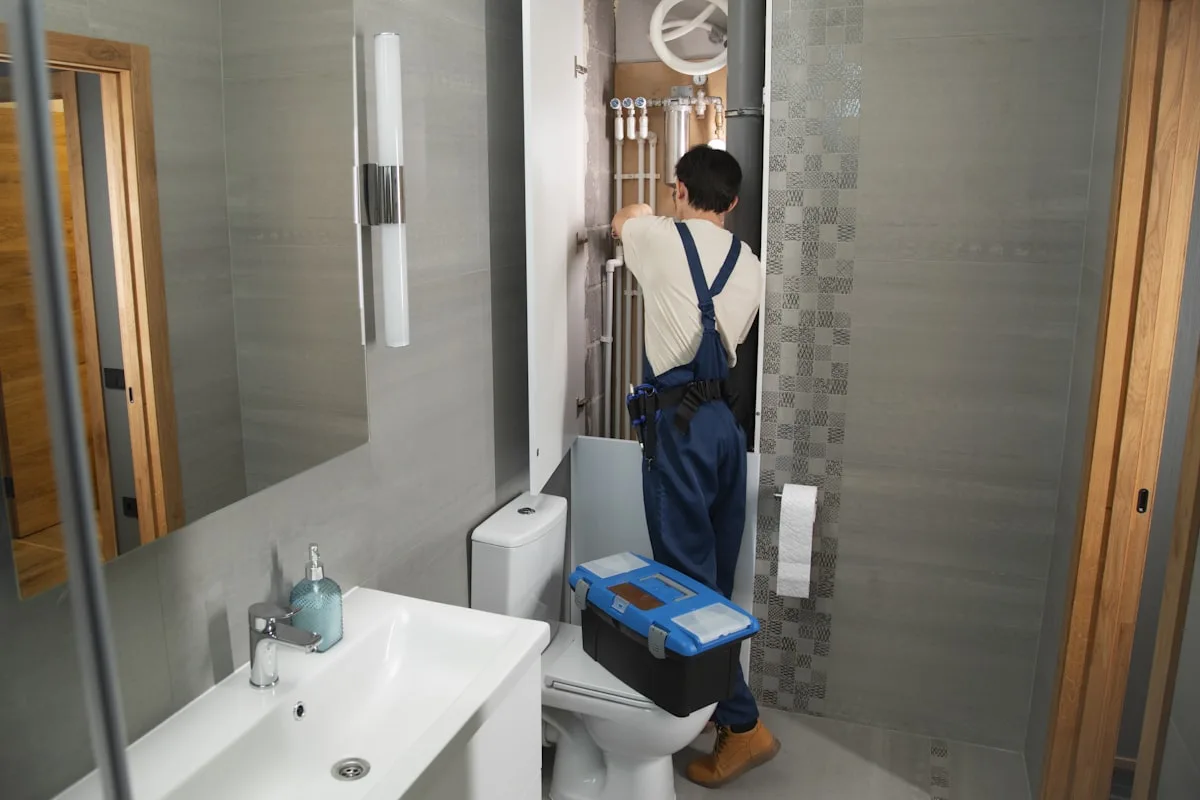
Why Is My Bidet Not Spraying Water? Fixes
Bidet not spraying or spraying weak? Work through this diagnostic checklist: T-valve, inlet filter, water pressure, kinked hose, clogged nozzle, and more.

Table of Contents
- Diagnose It in the Right Order
- Cause 1: The T-Valve Is Closed or Half-Open
- Cause 2: The Toilet's Main Shut-Off Valve Is Restricted
- Cause 3: A Kinked or Pinched Hose
- Cause 4: A Clogged Inlet Filter
- Cause 5: A Clogged Nozzle
- Cause 6: Pressure Set Too Low or a Faulty Dial
- Cause 7: Low Household Water Pressure
- Cause 8: A Faulty Internal Valve or Pump (Electric Seats)
- Repair or Replace? A Quick Guide
- Special Case: A Brand-New Bidet That Never Sprayed
- When to Call a Plumber
TL;DR
If your bidet stopped spraying, start with the easiest fix: the T-valve behind your toilet is probably closed or only half-open. From there, check the inlet mesh filter for sediment, look for a kinked hose, and descale a clogged nozzle with white vinegar. Most no-spray and weak-spray problems trace back to one of these five things and take under 15 minutes to fix with no tools.
Your bidet was spraying fine yesterday, and today you get a trickle or nothing at all. Before you assume the unit is broken, know this: the overwhelming majority of no-spray and weak-spray problems come down to a closed valve, a clogged filter, or mineral buildup. All three are quick fixes you can do yourself in minutes, no plumber required.
This guide walks through the causes in the exact order you should check them, from the most common and easiest to the least likely and hardest. Work top to bottom and you will almost always find the problem before you reach the end. If you are still setting up a new bidet and it never sprayed properly, jump to the new-installation section near the bottom.
Diagnose It in the Right Order
Troubleshooting is faster when you rule out the simple stuff first. Here is the order we recommend, and the rest of this guide follows it:
- T-valve behind the toilet (closed or half-open)
- Main shut-off valve for the toilet
- Kinked or pinched hose
- Clogged inlet filter (the mesh screen at the hose connection)
- Clogged nozzle (mineral buildup on the spray holes)
- Pressure control set too low or a faulty dial
- Low household water pressure
- Faulty internal valve or pump (electric seats only)
Do not skip ahead. People often replace a perfectly good bidet over a valve that got bumped closed.
Cause 1: The T-Valve Is Closed or Half-Open
This is the number one cause, full stop. The T-valve is the brass or plastic adapter that splits your water line, sending water to both the toilet tank and the bidet. It has a small lever or knob, and it is shockingly easy to knock partway closed when you reach behind the toilet to clean or retrieve something.
The fix:
- Look behind the toilet where the bidet hose tees off the water supply line.
- Find the T-valve's lever or knob.
- Turn it fully open. For a lever, that means parallel with the hose. For a knob, turn counterclockwise until it stops.
- Test the spray.
If the valve was the problem, you are done. If it was already fully open, move on.
Cause 2: The Toilet's Main Shut-Off Valve Is Restricted
Upstream of the T-valve is the main shut-off valve that feeds the whole toilet, usually a football-shaped or round knob low on the wall. If this is partially closed, both your toilet fill and your bidet lose pressure.
Turn it fully counterclockwise to open it completely. If your toilet tank has also been filling slowly, this is likely your culprit for both problems at once.
Cause 3: A Kinked or Pinched Hose
The flexible hose running from the T-valve to your bidet can kink, especially in tight setups where the hose loops sharply or gets crushed behind the toilet base.
Trace the hose from the valve to the bidet. Straighten any sharp bends and make sure nothing is sitting on top of it. A kink reduces flow exactly like a pinched garden hose. While you are there, check that both ends are threaded on straight and snug, since a cross-threaded connection can also choke flow.
Cause 4: A Clogged Inlet Filter
Almost every bidet, electric or not, has a small mesh filter screen where the water hose connects to the unit. Its job is to catch sediment and rust before it reaches the nozzle. Over months, that screen collects grit and mineral scale until water can barely pass through. This is the top cause of gradual weakening (as opposed to a sudden stop).
The fix:
- Close the T-valve to stop the water.
- Have a towel ready, then unscrew the bidet hose from the unit.
- Look inside the inlet port for a small cylindrical mesh screen. Pull it out with your fingers or tweezers.
- Rinse it under running water and scrub gently with a soft toothbrush. Soak it in white vinegar for 10 minutes if it is crusted with white mineral scale.
- Reinsert the filter, reconnect the hose, reopen the T-valve, and check for leaks.
If the mesh is torn or corroded, replace it. Most brands sell replacements for $5 to $15. Our bidet cleaning and maintenance guide covers filter replacement intervals by brand.
Cause 5: A Clogged Nozzle
If water is clearly reaching the unit but the spray is weak, sputtering, or aimed wrong, the nozzle spray holes are probably blocked by mineral buildup. Hard water is brutal on nozzles, leaving chalky calcium deposits that narrow each tiny hole.
The fix:
- Extend the nozzle. On electric seats, use the nozzle-cleaning button. On manual attachments, run the spray on low so the wand comes out, or check your manual for how to expose it.
- Wrap a cloth soaked in undiluted white vinegar around the nozzle tip.
- Leave it 15 minutes to dissolve the scale.
- Scrub the spray holes gently with a soft toothbrush.
- Run the self-clean cycle or wipe clean, then test.
Do not poke the holes with a needle or pin. You can permanently widen them and ruin the spray pattern. Vinegar does the work safely.
Cause 6: Pressure Set Too Low or a Faulty Dial
It sounds obvious, but check it. Manual bidets have a pressure dial or lever, and electric seats have pressure buttons on the panel or remote. If someone turned it down (kids love spinning dials), the fix is a five-second turn back up.
On manual attachments, if the dial is maxed out but the spray is still weak and you have ruled out the filter and nozzle, the internal pressure valve in the control unit may have failed. These are not user-serviceable on most attachments, which means it is time for a replacement.
Cause 7: Low Household Water Pressure
Non-electric bidet attachments rely entirely on your home's water pressure, since they have no internal pump. If your whole house has weak pressure, your bidet will too.
Quick test: turn on the sink or shower nearby. If those are also weak, the problem is your household supply, not the bidet. Common causes include a partially closed main water valve, a failing pressure regulator, or municipal supply issues. A plumber can measure your pressure; anything below about 30 PSI will leave most attachments feeling underpowered.
If you have chronically low pressure and a manual attachment that just cannot deliver, an electric seat with a built-in pump is the real solution, because it pressurizes the water itself. Our best bidet seats roundup highlights models that spray strongly even on weak supply lines.
Cause 8: A Faulty Internal Valve or Pump (Electric Seats)
This applies only to electric bidet seats and smart toilets. If the seat has power, the panel lights up, and it responds to your commands, but no water sprays even after you have confirmed the T-valve is open and the filter is clean, the fault is internal.
Electric seats use a solenoid valve to start and stop water flow and, on many models, a small pump to boost pressure. Either can fail. There is no safe DIY fix here, since it involves the sealed internal water path and live electrical components.
Before you do anything else, try a reset: unplug the seat for 30 seconds, plug it back in, and test. A surprising number of electronic glitches clear with a power cycle. If a reset does not help, check the warranty.
Repair or Replace? A Quick Guide
| Bidet type | Typical price | Internal failure verdict |
|---|---|---|
| Non-electric attachment | $50 to $100 | Replace. No serviceable parts; cheaper than a service call. |
| Mid-range electric seat | $300 to $600 | Check warranty first (often 1 to 3 years). Repair if covered. |
| Premium electric seat / smart toilet | $600+ | Contact manufacturer. Warranty service is usually worth it. |
The math is simple. If the unit is cheap or out of warranty and the failure is internal, replace it. If it is a premium seat still under warranty, let the manufacturer handle it. For affordable, easy-to-maintain replacements, see our best budget bidet attachments roundup.
Special Case: A Brand-New Bidet That Never Sprayed
If your bidet has never worked since installation, the problem is almost always the setup, not a defect:
- T-valve not opened. The most common new-install mistake. Open it fully.
- Supply line not fully reconnected. After installing the T-valve, the toilet's original supply line must be reattached and the main valve reopened.
- Hose connected to the wrong port. Some bidets have separate hot and cold inlets. Double-check the labeling.
- Protective film or cap left on. A few units ship with a small plug or film over the inlet. Remove it.
- Pressure dial at zero. Set the control to a mid or high level for the first test.
Our how to use a bidet guide covers first-time operation, and if you are still working through the physical install, the bidet installation guide walks through every connection step.
When to Call a Plumber
You have done your part once you have checked the valves, hose, filter, and nozzle. Call a professional if:
- Water leaks from the wall connection or T-valve and tightening does not stop it.
- Your whole house has low pressure that you cannot trace to a valve.
- An electric seat has power but no spray after a reset, and it is out of warranty.
- You see corrosion or cracking on any metal supply fitting.
For everything else, this checklist will get your bidet spraying again in the time it takes to read it. Start at the T-valve, work down the list, and you will almost certainly find the fix before you reach the bottom.
Frequently Asked Questions
Why did my bidet suddenly stop spraying water?
How do I increase weak bidet water pressure?
Where is the filter on a bidet and how do I clean it?
Can hard water stop a bidet from spraying?
My electric bidet seat has power but will not spray. What is wrong?
Should I repair or replace a bidet that stopped spraying?
Why does my bidet spray weakly only on cold water but fine on warm?
You Might Also Like
How to Install a Bidet Without an Outlet
No GFCI outlet near your toilet? Install a non-electric bidet in 15 minutes, get warm water without electricity, and skip the electrician entirely.
How to Use a Bidet: A Step-by-Step Guide for First-Timers
New to bidets? Here's exactly how to use one, covering electric seats, attachments, sprayers, and standalone bidets, with tips on pressure, temperature, and drying.
How Much Does a Bidet Cost? Complete Price Breakdown
Bidet costs range from $50 for attachments to $13,000+ for smart toilets. See real prices, running costs, and 3-year total cost of ownership comparisons.
How to Install a Bidet Seat in 30 Minutes
Step-by-step guide to installing a bidet seat or attachment on your existing toilet. No plumber needed for most models.